

A cultural journey through sound baths (and why their vibrations still move us)
How ancient rituals from the Himalayas to Greece shaped a modern practice that helps us return to stillness.

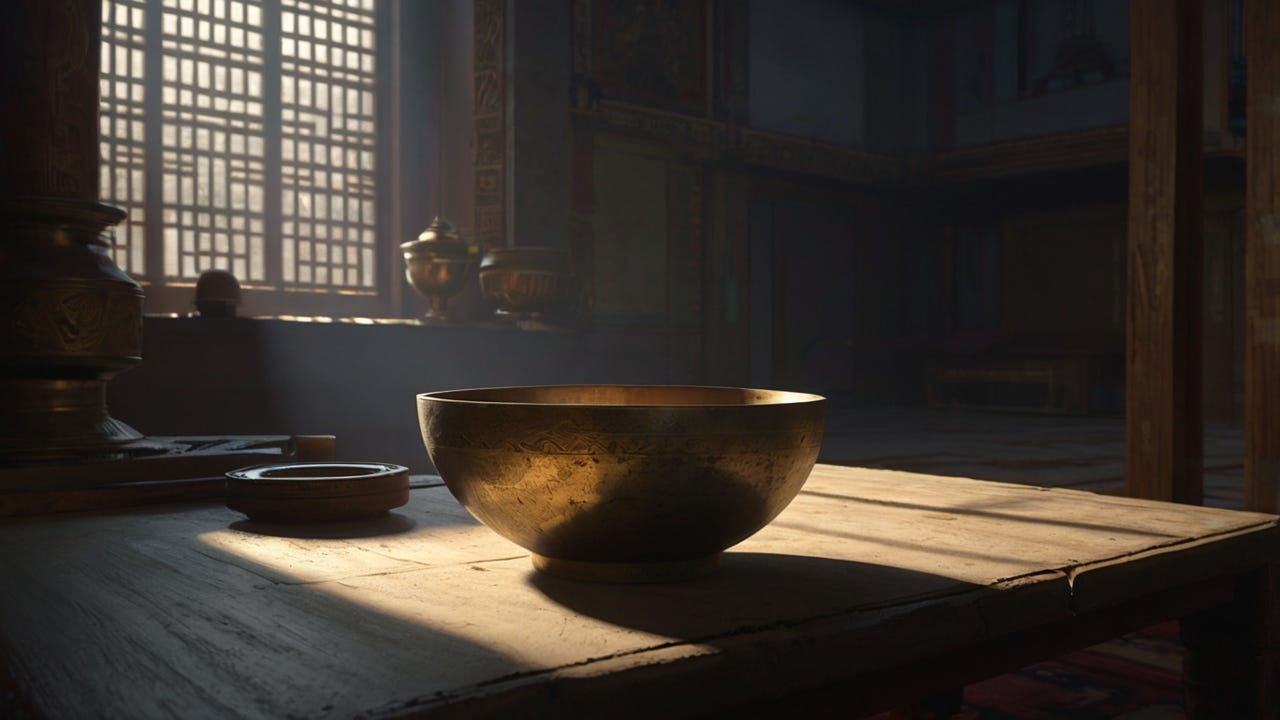
At sunrise in the Himalayas, the day doesn’t begin with a word.
It begins with a tone.
A single bronze bowl rings out across the monastery courtyard, the sound stretching into cold air like a thread.
Monks say the bowl doesn’t just announce the morning. It clears the space inside the mind before thought arrives.
Travelers swear the sound feels physical, as if the air itself briefly softens.
Across the world, far from Himalayan stone and frost, the same idea appears again and again:
Sound as a doorway.
A threshold between one state and another.
A way to step out of ordinary consciousness and into something quieter, wider, more spacious.
Today we call this a sound bath.
But the practice is older than the phrase. And richer in cultural wisdom than most modern wellness studios let on.
What a sound bath really is
A sound bath has nothing to do with water, yet the metaphor fits: you’re submerged, enveloped, dissolved inside something gentle.
Modern sessions often use Himalayan bowls, crystal bowls, chimes or gongs. You lie on the floor, eyes closed, while sound waves pour over and through you.
People describe the experience like:
drifting
dreaming without sleep
floating inside a single long exhale
But what you’re really entering is an old human instinct: using sound to alter consciousness.
Long before “wellness” existed, cultures understood that sound can cleanse a room, reveal an inner truth, soften a mind, or prepare it for ritual. The bowls and gongs we hear today are simply the latest expressions of a very ancient longing.
The cultural lineage of healing sound
Sound healing isn’t a single origin story. It’s a constellation. No one culture “invented” the practice. Instead, humanity kept rediscovering it.
Himalayas: Sound as spatial awareness
Tibetan singing bowls were not originally “healing tools.” They were used to:
sharpen awareness
mark the beginning of practice
guide monks into a more spacious state of mind
The bowl’s lingering resonance becomes a meditation object — a sound you follow until it disappears. That fading teaches impermanence more clearly than any text.
Japan: Bells that measure time and impermanence
In Zen temples, the bonshō (an enormous bell) is struck slowly, deliberately.
The Japanese say each strike dispels clouds in the heart.
Its deep vibration is believed to clean the mind, preparing it to see clearly.
Greece: The music of the spheres
Pythagoras taught that the universe was structured through vibration. To him, harmony wasn’t just musical. It was moral, cosmic. Certain intervals were believed to tune the soul back into alignment with the order of the cosmos.
Australia: Sound that shapes the world
The Yidaki (didgeridoo) isn’t merely an instrument. It’s a cosmological tool. Its drone mimics the sounds of the Dreaming, the time when the world was sung into being.
To play it is to participate in creation.
Sufi traditions: Listening as remembering
In Sufi ceremonies, the practice of samā (deep listening) is a path to remembrance. Sound becomes a devotional act. A way to reconnect to the beloved, the source.
Wherever you look, cultures discovered the same truth in different forms:
Sound reorganizes the inner world.
Why sound affects us (culturally and scientifically)
Modern neuroscience tells us something ancient people observed intuitively:
Sound entrains the mind.
Slow tones encourage slow brainwaves.
Steady rhythms quiet stress circuits.
Vibrations ripple through the fascia and organs.
But cultures long before physics knew this in their own language.
The Greeks spoke of tuning the soul
The Japanese spoke of cleansing the heart
The Himalayans spoke of “emptying the mind’s dust”
Indigenous cultures spoke of opening pathways back to ancestors
Sufis spoke of softening the self enough to remember what matters
Science explains the mechanics.
Culture explains the meaning.
Sound baths sit in that meeting point between the physical and the symbolic — where biology blends with myth, ritual, and the human need to feel connected to something larger than the self.
What a sound bath session feels like (and why)
A modern sound bath typically lasts 60–90 minutes.
You lie down, eyes closed.
The practitioner strikes, rubs, and resonates instruments in slow, intentional sequences.
Most people report:
a drifting mind
sensations of weightlessness
emotions emerging and dissolving
a sense of being “cleaned” internally
This is not accidental.
Across cultures, sound has always been used to mark transitions:
into trance
into prayer
into healing
into mourning
into meditation
into celebration
A sound bath is simply a contemporary container for these timeless transitions.
How to prepare and how to listen culturally
Modern advice says: “Wear comfortable clothes and relax.”
But culturally, listening was never passive. It was participatory.
Try entering a sound bath the way a monk or practitioner might:
1. Arrive with intention
Not a goal. Just a direction.
“Show me what I need to see.”
“Let the noise fall away.”
2. Treat it as ritual, not entertainment
This shifts your entire experience.
3. Listen with the body, not the mind
Feel the sound in you, not just around you.
4. Let meaning emerge rather than forcing it
Ancient cultures trusted sound to reveal what language cannot.
How to bring sound baths into your life?
Attend local sessions
Yoga studios, cultural centers, meditation spaces — anywhere people gather to explore consciousness — often host them.
Online platforms are also an emerging space offering virtual sound baths, making this healing practice accessible wherever you may be.
Here are a few examples of online platforms where you can start:
Insight Timer: A meditation app that offers live and recorded sound bath sessions from various practitioners worldwide.
Healing Vibrations: A YouTube channel offering free recorded sound bath sessions for relaxation and healing.
The Sound Healing Academy: Offers a wide range of online training courses in sound healing, including guided meditations and recorded sound baths.
Explore different traditions
A Himalayan bowl session feels different from a gong ceremony.
A Sufi-influenced session feels different from a Japanese bell ritual.
Let yourself explore the cultural roots.
Or create a personal ritual at home
You don’t need many tools. One bowl, one chime, or even a recorded session can open a doorway… if you treat it like one.
The key is simple: listen with presence.
In the end, sound baths aren’t about sound
They’re about what sound opens.
They remind us of what every ancient culture already knew:
That we are vibrational beings in a vibrating world.
That harmony is not a metaphor. It’s a felt experience.
And that sometimes, the most direct path back to ourselves is not silence…
but resonance.
P.S. Here’s what a sound bath can look and sound like:
Culture only stays alive when shared. So, why not pass this on to a fellow explorer?
The same cultural wisdom explored here inspires my mythic worldbuilding project. If you’re curious, you can see how these insights can take shape in imagined worlds.
The way you make cultural depth feel accessible is rare, I’d be curious to hear how you translate these insights into practices your readers can experience daily.