

Why music boxes move us more than full orchestras
Why miniature melodies unlock memory, longing, and emotional presence

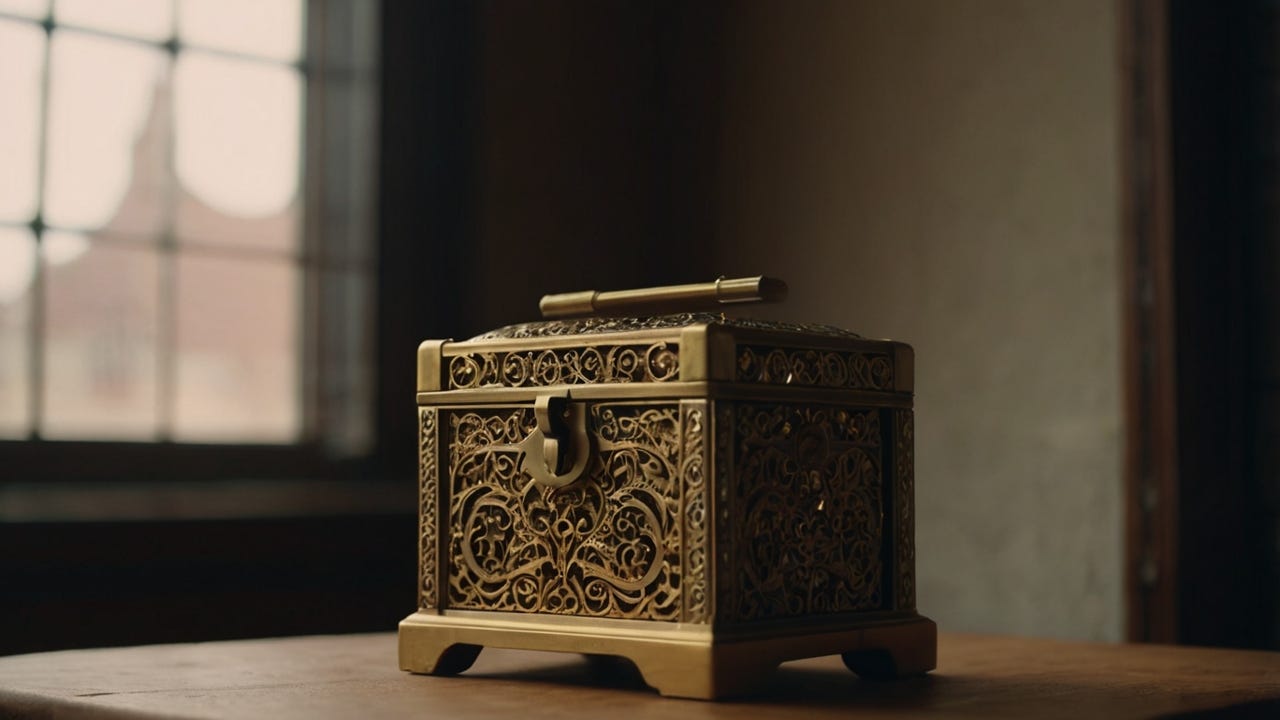
There is something quietly radical about a music box.
No screen lights up.
No speaker hums to life.
Nothing connects to the cloud.
You turn a small key, feel the gentle resistance of metal against metal, and then—almost shyly—a melody emerges. Thin, fragile, imperfect. And somehow, that imperfection is exactly the point.
For centuries, music boxes have carried sound the way a locket carries a face: intimate, portable, precious. They were never meant to overwhelm. They were meant to accompany—a companion to solitude, longing, remembrance.
Long before music became infinite, invisible, and instantly available, it lived inside objects. Objects that demanded patience. Objects that asked you to listen closely.
When music became something you could hold.
The story of music boxes begins in 18th-century Europe, an age intoxicated with mechanics, precision, and miniature wonders.
This was a time when mastery meant not scale, but compression. Watchmakers, automatists, and craftsmen competed not to build bigger, louder machines… but smaller, subtler ones. Marvels that fit into pockets. Secrets hidden in snuffboxes.
Early music boxes were born from this obsession. They weren’t conceived as standalone instruments, but as hidden companions. Nestled inside decorative boxes, watches, and trinkets. Music, reduced to its essence, carried wherever one went.
To hold such an object was to hold time itself. A melody captured in metal. A moment preserved, repeatable, eternal.
At first glance, early music boxes appeared almost modest.
Polished wood. Delicate ornamentation. Sometimes barely distinguishable from an ordinary keepsake.
But inside, they were anything but simple:
A revolving cylinder studded with tiny pins.
A steel comb, each tooth precisely tuned.
Every fraction of a millimeter mattered.
As the cylinder turned, the pins plucked the comb’s teeth, releasing a melody shaped not by breath or fingers, but by mathematics and intuition intertwined.
It was engineering as poetry.
Each box was assembled by hand. Each mechanism calibrated through patience and listening. Craftsmanship here wasn’t about speed or efficiency. It was about harmony. One misaligned pin, one poorly tuned tooth, and the spell would break.
These were objects that demanded reverence from their makers. And rewarded it with sound.
Luxury, yes. But also intimacy.
In their earliest form, music boxes were rare and expensive. They belonged to aristocratic homes, salons, and private chambers. They often played only one or two tunes, repeated endlessly.
And yet, unlike grand pianos or orchestras, music boxes were deeply personal.
They were meant for close listening. For late evenings. For solitary moments. For lovers separated by distance. For children falling asleep.
Their sound didn’t fill rooms. It hovered within them.
As fascination grew, so did ambition.
Swiss watchmakers and European inventors began pushing the limits of what these tiny machines could do. Among the most influential were:
Antoine Favre, who pioneered musical mechanisms small enough to fit inside personal objects
David LeCoultre, from a family that would become synonymous with precision craftsmanship
Nicole Frères, whose 1828 invention of the interchangeable cylinder transformed music boxes forever
The interchangeable cylinder was revolutionary. Suddenly, music was no longer fixed. A single box could carry multiple moods, multiple memories. Melodies could be swapped like stories.
Music boxes became less static. And more alive.
As mechanisms grew more sophisticated, exteriors followed suit.
Cases were engraved with pastoral scenes, mythological figures, lovers in eternal embrace. Materials became richer: rosewood, silver, ivory, gold. These boxes were no longer just instruments. They were cultural statements.
They spoke of refinement, patience, and taste.
They became heirlooms.
Passed from hand to hand, generation to generation, each one carrying not just a melody, but a lineage.
The 19th century marked a decisive shift.
Cylinders gave way to metal discs—flat, interchangeable, punched with precise patterns that functioned like mechanical sheet music. This innovation expanded repertoire dramatically and made music boxes easier to produce and maintain.
More importantly, it democratized them.
Music boxes left aristocratic parlors and entered middle-class homes. Cafés. Ice cream parlors. Public halls. Coin-operated machines appeared—the ancestors of jukeboxes.
Music, once again, was becoming communal.
The Industrial Revolution accelerated everything.
Steam-powered machinery lowered costs. Production scaled. Music boxes multiplied. What had once been rare became familiar.
Larger disc machines emerged, capable of filling public spaces with sound. Music boxes became social devices—gathering points, background companions to conversation and leisure.
Yet even in this expansion, something intimate remained. Unlike later technologies, music boxes still demanded… physical presence. You had to be there. You had to turn the crank.
It’s no accident that Switzerland became the heartland of music box mastery.
A culture already steeped in watchmaking precision applied its ethos seamlessly to sound. Swiss music boxes were renowned for their tonal clarity, balance, and craftsmanship.
Geneva, in particular, emerged as a center of mechanical music. Where timekeeping and melody shared the same language.
Even today, Swiss music boxes from the 19th century are revered not as curiosities, but as benchmarks of excellence.
Across the world, music boxes also found new expressions.
In Japan, they merged with a long tradition of automata and storytelling. Yokohama workshops produced astonishing creations: music boxes animated with moving figures, flowing waterfalls, turning windmills.
These were not merely instruments. They were performances in miniature. Sound and motion intertwined.
To watch them was to witness a philosophy: that technology could be gentle, playful, and deeply human.
The Golden Age. And the quiet fall.
By the late 19th century, music boxes were everywhere. And at their peak.
Pocket-sized boxes. Cabinet symphonions. Public machines. Private treasures.
And then, almost abruptly, they were eclipsed.
The phonograph and gramophone arrived, offering longer recordings, voices, orchestras… sound without mechanism, memory without movement.
Music boxes faded. Not vanished. But sidelined.
Why they never truly disappeared?
Because something essential was lost in the transition.
Music boxes didn’t just play music.
They embodied effort.
They made sound visible.
In a world of instant playback, they remind us that music once required intention. Touch. Waiting.
Today, antique music boxes are cherished not out of nostalgia alone, but out of recognition. They represent a different relationship with technology. One rooted in patience, tactility, and care.
They whisper of a time when objects were made to last. When beauty wasn’t optimized, but crafted.
Perhaps that’s their quiet power.
A music box is small. Almost insignificant. And yet it can stop us mid-thought. Pull us backward. Open something tender.
In its fragile melody, we hear more than notes.
We hear slowness.
We hear memory.
We hear the human desire to trap wonder inside matter—and let it sing.
And maybe that’s why, even now, when the world hums endlessly around us, a music box can still make us listen.
Culture only stays alive when shared. So, why not pass this on to a fellow explorer?
The same cultural wisdom explored here inspires my mythic worldbuilding project. If you’re curious, you can see how these insights can take shape in imagined worlds.
Really loved this, Zhenya! I learned so much about the history of music boxes across time and around the world. I hadn’t fully connected Switzerland’s role before, but it makes total sense now. I really enjoy how you frame music boxes as embodying effort and making sound visible. And hearing slowness and memory, super inspiring!