

7 lessons Montenegro gives you long after you leave
Why Montenegrins live slower, stress less, and enjoy more—and what their culture can teach the rest of us

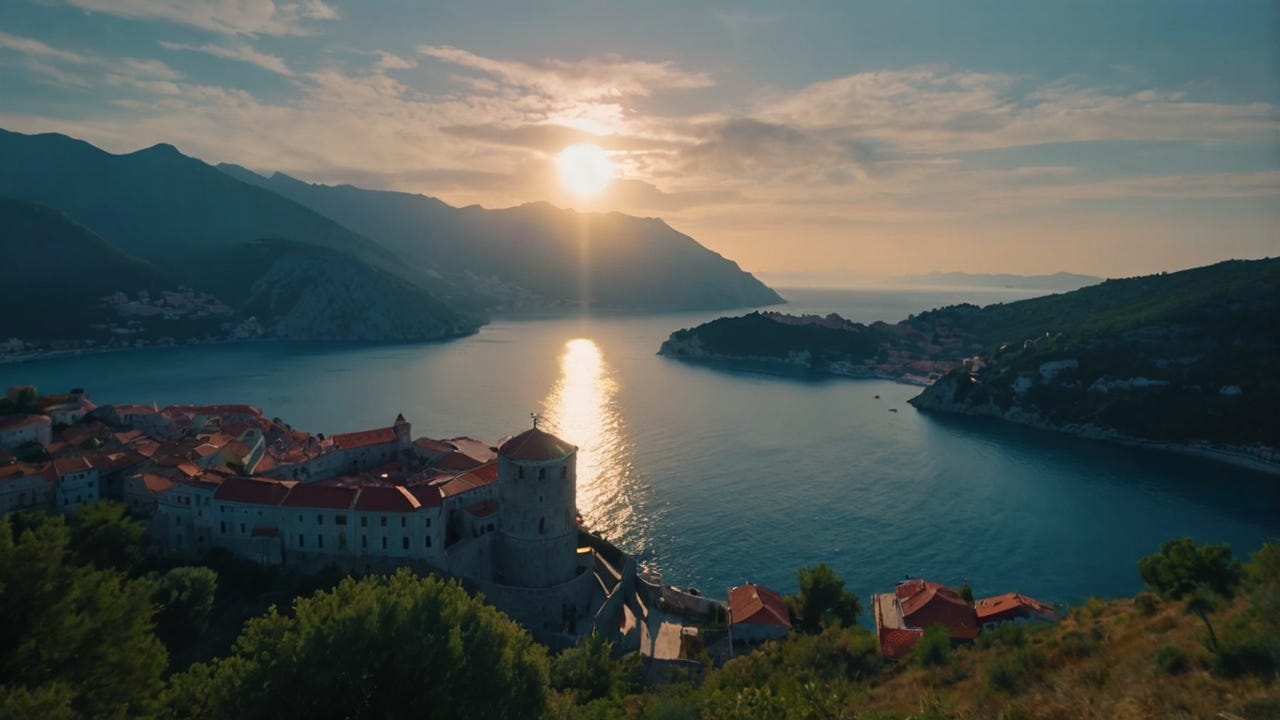
In 2023, my wife and I spent a few quiet months in Montenegro — a small, rugged country on the Adriatic coast where mountains meet the sea with the calm confidence of two ancient friends.
People often describe Montenegro as picturesque. And it is. Its coastline looks like it exhaled straight from a postcard. The mountains rise with a kind of stern beauty. Villages cling to cliffs as if they’re keeping centuries of stories from slipping into the water.
But I’d say the true magic of Montenegro isn’t even what you see. It’s how life feels.
There’s a different rhythm moving through the country — slower, seasoned, grounded. A way of being that’s both Mediterranean and uniquely Montenegrin. A quiet refusal to rush. A deep respect for land, family, and tradition. A gentleness in the way time is allowed to pass, unhurrying and unbothered.
This isn’t the curated “slow living” trend that circulates online.
It’s an older slowness. A lived one.
A cultural inheritance that shows up in gestures, rituals, and the way people treat each other.
And I wanted to share some lessons the land leaves in your hands long after you’ve left.
1. Stay close to nature. Not as a hobby, but as a way of belonging.
Montenegro is a masterclass in intimacy with the natural world.
From the mirrored stillness of Lake Skadar to the jagged peaks of Durmitor, nature isn’t something Montenegrins visit. It’s something they live inside. People buy vegetables from small family farms. They fish only what they need. They follow the seasons instinctively. Because in Montenegro the land is not background. It is kin.
There’s no romanticism here, no performative eco-consciousness. Just an old relationship: the land provides, and you treat it with respect.
It makes one rethink one’s own connection to nature. How often do you treat it as a break, a weekend accessory, a conscious choice? In Montenegro, it is simply the ground reality of life.
How this can translate to our lives:
You don’t need dramatic landscapes to live more connected. Even small rituals begin to shift your rhythm:
tending herbs on a balcony
prioritizing fresh, local food
sitting outside instead of scrolling inside
a walk every morning with our phone left at home
Nature recalibrates us in a way almost nothing else does.
And Montenegro reminds one that returning to the earth isn’t a luxury.
But a return to ourselves.
2. Hold onto your traditions. They anchor you in a fast world.
Montenegro is young as a state but ancient as a culture.
Drive through the mountains and you’ll see monasteries carved into cliffs. Wander the villages and you’ll hear stories told the same way they were a hundred years ago. Families proudly keep dances, songs, and customs alive. Not because they’re nostalgic, but because these things tell them who they are.
Tradition is Montenegro’s way of staying rooted while the world erupts into speed.
We often underestimate how grounding cultural memory can be. We confuse progress with severing ties to the past. But Montenegro teaches that traditions don’t imprison you — they stabilize you. They remind you of the human chain you belong to.
Try this yourself:
Reflect on your own cultural inheritance or family stories:
Which stories do you still remember?
Which rituals shaped your childhood?
What wisdom did your grandparents or elders offer you?
Keep one of those traditions alive. Even in small ways.
And learn others too.
Cultural curiosity expands you. Cultural continuity steadies you.
3. Build strong bonds with family and community. They’re your real safety net.
In Montenegro, family is not an obligation. It’s the center of gravity.
Meals stretch long into the afternoon. Neighbors come and go without ceremony. Celebrations are communal. And there’s always an extra chair for whoever arrives.
But Montenegrin hospitality isn’t performance. It’s instinct.
People live more connected because they live less hurried.
And they’re less hurried because they live connected.
It’s a cycle that strengthens both sides.
And perhaps what struck me most wasn’t even the social warmth. It was the ease. The unforced togetherness. The sense that life becomes more manageable when you’re not trying to hold it alone.
How to integrate this:
Make space for relationships that nourish you.
Cook with friends.
Start small weekly rituals with family.
Say yes when your neighbor invites you for a drink.
Let conversations wander without checking the clock.
Belonging doesn’t happen spontaneously.
It grows where time and presence meet.
4. Find joy in the small, unplanned moments.
If Italy has dolce far niente, Montenegro has something gentler — a quiet pleasure in simple, unhurried moments.
A trip to the market isn’t an errand. It’s a social orchestra.
A coffee overlooking Kotor Bay isn’t a caffeine fix. It’s a meditation.
A walk through the old town isn’t “filler time”. It’s where life happens.
Montenegrins don’t chase moments. They step into them.
When you slow down, you notice the texture of your own life. The tiny details that make up your days. The warmth of a cup. The way light hits a stone wall. The scent of grilled fish drifting from a neighbor’s terrace.
These small things are not trivial. They’re the threads memory is woven from.
Try this:
Choose one daily activity and turn it into a ritual:
cooking dinner
your first coffee
lighting a candle
your evening walk
reading for 10 minutes
Presence transforms the ordinary into the meaningful.
Montenegro really reminds one that joy doesn’t hide in big events. It lives in small, steady doses.
5. Live simply. And let “enough” be enough.
Montenegrins tend to have a grounded sense of what they truly need.
Homes are practical, not performative. Possessions matter less than shared moments. People don’t seem addicted to upgrades, trends, or constant consumption.
It’s not minimalism as an aesthetic.
It’s minimalism as common sense.
This simplicity creates space — for rest, for connection, for clarity. It’s a cultural antidote to the constant “more” so many of us chase without knowing why.
To bring this into your life:
Ask yourself:
What would simplify my days the most?
What takes up space but adds no meaning?
Where am I keeping things — objects, commitments, habits — out of inertia, not intention?
Then remove one layer of excess.
You don’t need a dramatic declutter. Just one subtraction at a time.
Simplicity isn’t deprivation. It’s liberation.
6. Be resilient. Adapt, endure, and keep going.
Montenegro’s history is marked by shifting borders, invasions, political upheavals, and constant reinvention. Yet Montenegrins remain extraordinarily grounded and proud.
But I believe their resilience doesn’t come from hardness. It comes from flexibility. And a strong sense of identity.
The attitude is simple:
Life will change. Life will challenge.
But you adapt, you stay close to your people, and you move forward.
Resilience, I realized here, is not always an inner toughness you “build.”
It can also be a collective strength you’re held by.
To cultivate this:
Focus on practices that strengthen your adaptability:
Let go of what you cannot influence
Lean on the people who support you
Reflect on previous obstacles you’ve survived
Stay open to new directions when the old ones end
Resilience grows when you trust yourself enough to bend without breaking.
7. Balance work and life. And let life win more often.
Montenegrins work hard. Especially in tourism, hospitality, agriculture, and the small businesses that keep communities alive. But work never becomes the core identity.
People don’t glorify overwork.
They don’t wear busyness as a badge.
They don’t sacrifice life at the altar of productivity.
They understand something many societies forget:
Work is part of life, not the whole of it.
So they pause.
They rest.
They gather.
They celebrate.
They take breaks because energy is a resource, not an infinite supply.
In your own life:
Protect your time like Montenegrins protect their evenings.
Take real breaks during the day
Set boundaries around work hours
Keep weekends sacred when possible
Schedule joy as seriously as you schedule tasks
Balance isn’t a luxury.
It’s a necessity for a life that feels whole.
Experience life, Montenegrin style.
Montenegro may be small, but its cultural wisdom runs deep.
It teaches slowness without laziness.
Simplicity without emptiness.
Strength without harshness.
Joy without extravagance.
Its lessons are not instructions. They are invitations:
To sit.
To breathe.
To savor.
To connect.
To remember who you are when you’re not rushing.
And you don’t need to live in Montenegro to live like Montenegro.
You just need to choose — again and again — the things that make life feel full, human, and beautifully unhurried.
If you ever forget how, the Adriatic waits quietly.
And the mountains, as always, are patient.
Culture only stays alive when shared. So, why not pass this on to a fellow explorer?
The same cultural wisdom explored here inspires my mythic worldbuilding project. If you’re curious, you can see how these insights can take shape in imagined worlds.